
Neurodevelopmental Conditions
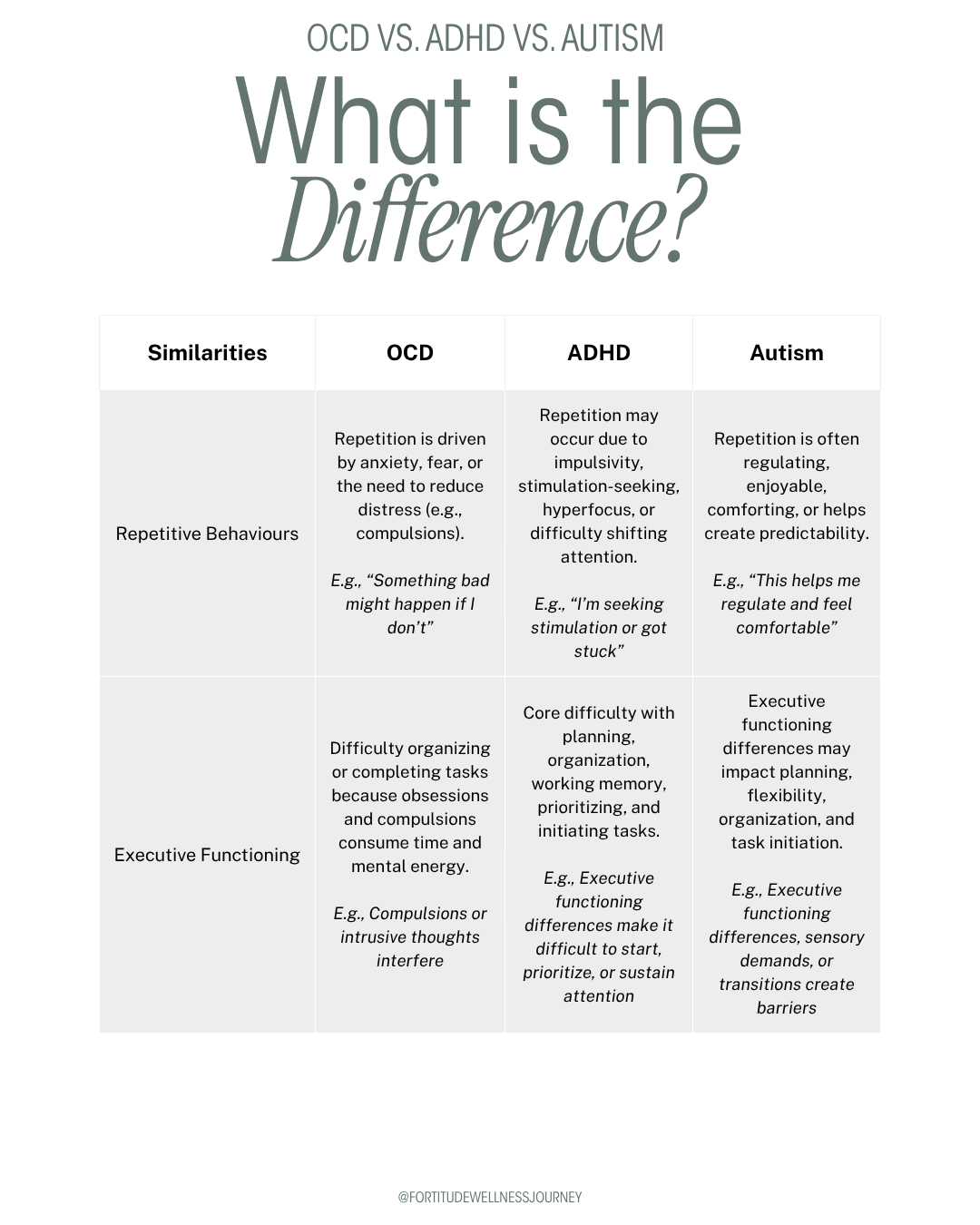
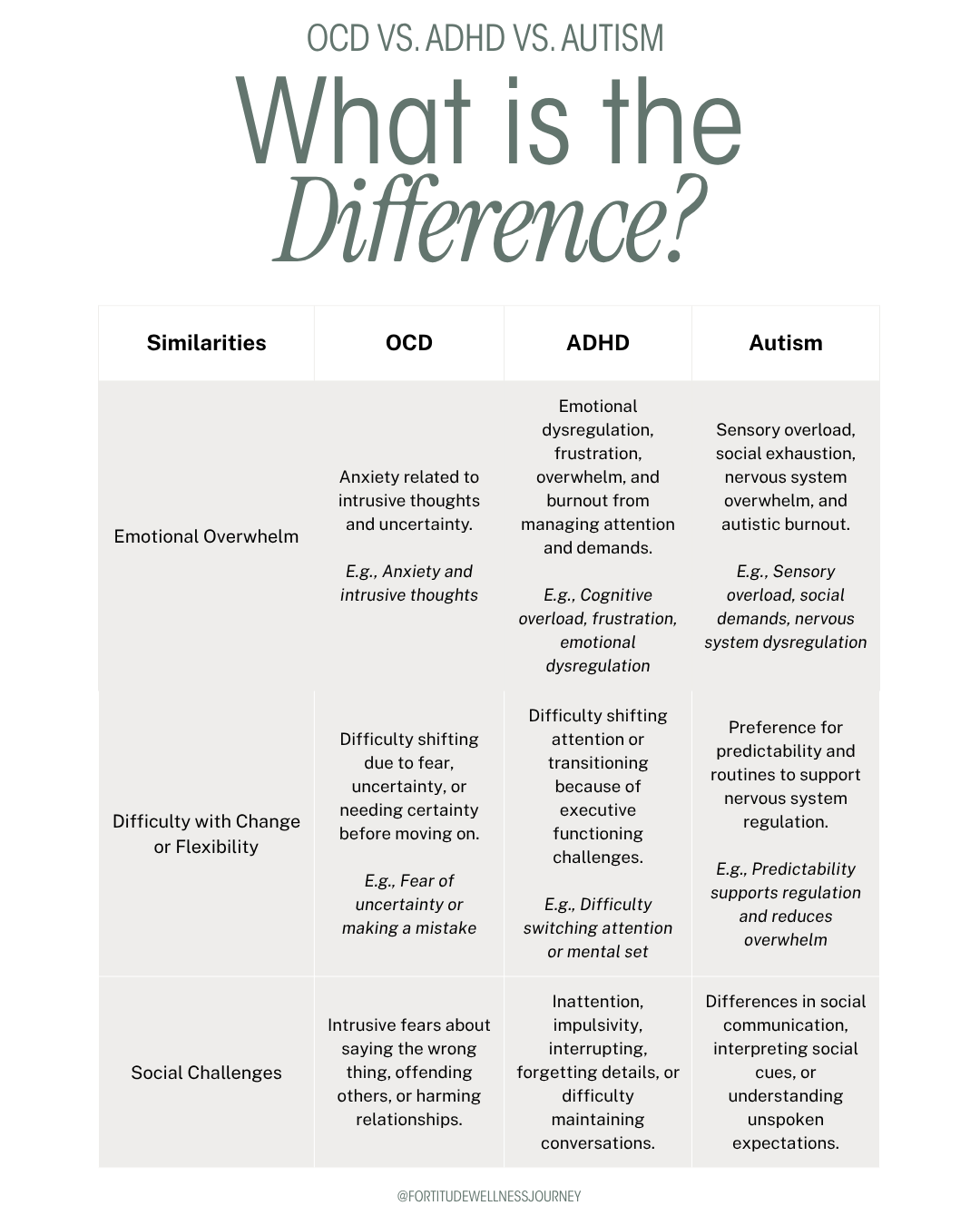
Mental health and neurodevelopmental conditions are often misunderstood, particularly because many of their symptoms can overlap. While Obsessive Compulsive Disorder (OCD), Attention Deficit/Hyperactivity Disorder (ADHD), and Autism are all commonly recognized within the broader neurodivergent community, they are distinct conditions with different underlying characteristics. Although they may appear similar on the surface, the underlying motivations, internal experiences, and functions of these behaviours are often very different. Understanding the "why" behind a behaviour is essential for accurate assessment, diagnosis, and effective support.
Many individuals also experience more than one of these conditions simultaneously, which can make the diagnostic process, and even self understanding, feel confusing or overwhelming.
Recognizing both the similarities and the differences between OCD, ADHD, and Autism can help reduce stigma and self blame, foster greater self awareness, and ensure individuals receive the most appropriate support and intervention.
Whether someone is navigating intrusive thoughts, executive functioning challenges, sensory overwhelm, emotional dysregulation, or all of the above, support is available. Understanding yourself more clearly can be an important part of healing, self-acceptance, and finding the support that best meets your unique needs.
✨ Scroll through to learn more about the similarities and differences between OCD, ADHD, and Autism.